
Everyone was asking for portals in 1999. They were a bad idea then, too…
The portal trap
Published on
No one likes portals, one-stop shops, single front doors or gateways, so why are they the go-to solution for so many large organisations?
Published on
No one likes portals, one-stop shops, single front doors or gateways, so why are they the go-to solution for so many large organisations?
Published on
Around 2016 I came across a line from a blog post by Carrie Bishop that's stuck with me ever since:
'I really wish I had one place where I can see all my transactions with the council', said nobody, ever
It was a response to the steady stream of portal requests that flow from policy into digital teams. Over the years I've lost count of how many times I've been pulled into conversations about creating "one place" to do everything. A hub for permits. A dashboard for services. A front door for users.
It's solution-based conversations like these that have created my slight hatred for all things portal. Not ideal when you go on to inherit a portfolio tasked with delivering the deapartments portal to end all other portals.
Whenever you challenge the reasoning or need for another portal, you're met with a stream of user needs that argue for its creation, like:
On the surface, they sound reasonable.
But these are not user needs. They are assumptions.
I don't doubt users say these things, but it's not what they mean or what they need. What they need is less duplication, less confusion, and more confidence they've done what they need to do.
In a recent survey we found nearly two thirds of users were not confident they would spot changes to guidance. Around three quarters worried about missing new opportunities. Almost half said they spent more time finding information than doing their jobs.
These are very real problems that exist in most government departments.
The assumption that putting everything in one place will solve them is where the bigger problems begin.
As more interactions move online, we don't simplify, we accumulate. Guidance multiplies, services expand, entry points fragment, and communication channels stack up. In most organisations, users are dealing with too many services, thousands of pages of guidance, and numerous communication channels.
When everything is spread out and we know users are becoming overwhelmed, we often respond by bringing things together.
The issue is that these decisions are usually made from an internal perspective. Organisational structures shape the thinking, instead of user behaviour. And because every team sees the problem through its own lens, we don't end up with one portal.
We end up with lots of portals.
Service A        Service B        Service C
    |                |                 |
Portal A         Portal B          Portal C
    \                |                 /
                   Users

  Each portal solves a local problem — together they add duplication
Each one may solve a local problem, but collectively they increase duplication and effort for users trying to get things done.
If we want to fix this problem properly, we need to start with services. We need to build teams around the services we provide and hold them accountable for the whole experience, not just one part of it.
This is starting to happen in some government organisations, with more focus on service ownership and delivery. But in many areas it still feels a long way off. And even as we get closer to it there will never be a perfect way to slice things.
At Defra, there is an arm's length body dedicated to safeguarding animal and plant health (APHA) and another to protect and enhance the marine environment (MMO). Both have a role in exports post-EU Exit, creating overlap whichever way you look at it.
At DfE we structure around Skills, Schools and Families, but we also have cross-cutting capabilities like funding.
There will likely never be a time where a user only needs to engage with one service to achieve what they perceive as a single task.
So there has to be a more pragmatic solution: a way to make things feel seamless even when they are not. We need consistent ways of describing, exposing and linking services so users can move across them without friction.
This was the brief given to the team I picked up a year ago: create one single entry point for [users] to see all their tasks, services, content and guidance in one place.
Setting a brief like this created three key problems.
It fixates people on putting everything in one place, when what users actually want is relevance and reassurance.
They don't want everything. They want confidence.
These are much better user needs to start with than "I need to see everything".
But a portal only meets these needs if what it shows is relevant to that user and points to something they can act on. Show the wrong things, or the right things with no clear next step, and you've just built a smaller, tidier version of the same overwhelm.
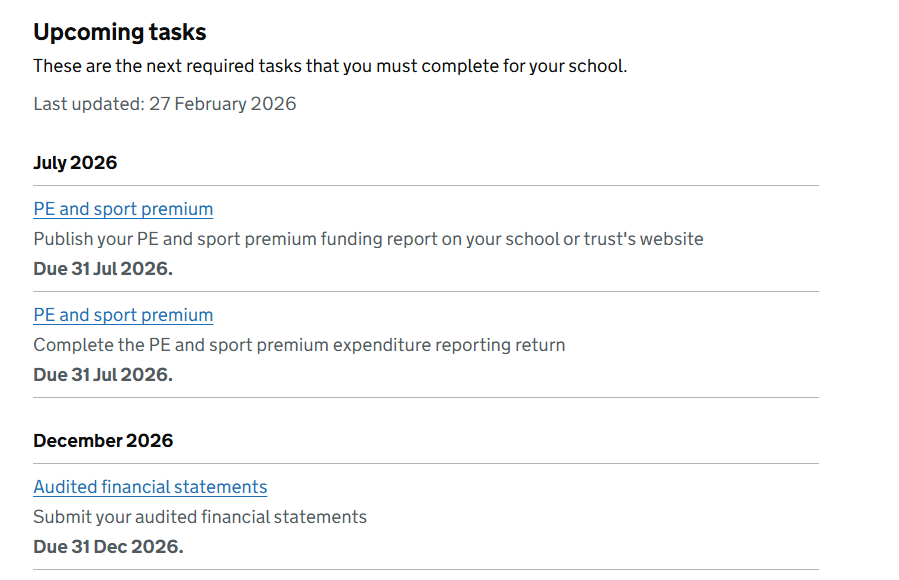
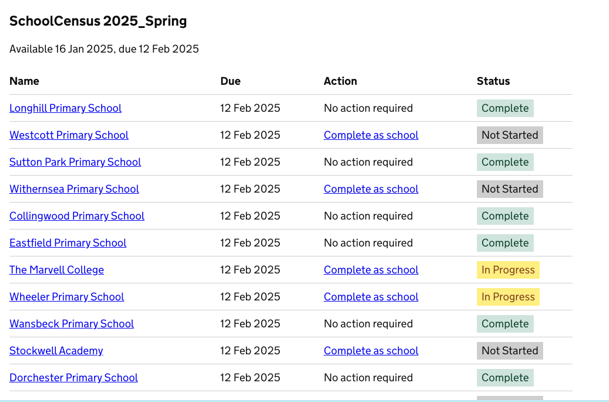
Joining things up is not just a content challenge, it's a systems problem.
We're dealing with multiple systems built at different times, for different reasons, to different standards, and with different data structures. Without shared data or consistent structures, a portal quickly becomes an interpretation layer sitting between everything else.
Service A     Service B     Service C
     \            |            /
        Interpretation layer
               |
            Portal
               |
             Users
This creates a new and costly business process. Someone has to collect information from multiple teams, interpret it, and keep it updated.
These two problems lead to two very risky assumptions: that showing everything in one place is better than the current services, and that the internal business processes this depends on are stable enough, have the support of the department, and can scale as needed.
Both of these assumptions were unproven. If your ambition is a single trusted entry point, it can never be wrong or out of date. That makes this model incredibly fragile.
A team tasked with building a portal like this often has no ownership of the services it is bringing together. That can lead to tension, where the narrative shifts towards one team appearing to own everything, or other teams losing control over their own services.
This often comes from good intentions. A team tries to solve problems on behalf of others rather than with them. The intent is to help. The effect is a lot of annoyed people, and services that feel like they've had decisions made about them rather than for them.
Neither is healthy. And neither scales well.
These problems are hard to fix, they cut across an entire organisation, and they require trust and collaboration to solve. To succeed we need people to work together on things outside their immediate interests.
For us, this initially looked like a step backwards.
We paused a private beta that wasn't meeting user needs, couldn't scale, and couldn't be maintained without significant ongoing effort and cost. We went back to basics and re-validated the problem space.
We set a clear vision:
"All [users] can easily access the support and guidance they need, when they need it."
We also set supporting goals:
This helped us avoid building something that improved the user experience but increased duplication and cost behind the scenes.
Rather than trying to solve everything at once, we tested whether we could add value in a small number of areas first. We focused on three user journeys chosen deliberately to cover:
Alongside traditional alpha work on journeys and UI design, we also ran technical experiments. These included lightweight ways of retrieving data from existing services rather than building a central data store. We needed to prove this could work at scale and across both modern and legacy systems.
We also ran personalisation tests to understand whether we could tailor content based on role, organisation and context. Finally, we plan to explore whether we could go further and recommend actions or opportunities based on what we know about users.
Together, these concepts move us towards a more useful outcome: helping users understand what they need to do, when they need to do it, and what they might be missing.
A single entry point or 'portal' can help users navigate complexity, but it cannot replace the need to fix that complexity at source. Wider transformation work is still needed.
I would describe our portfolio as:
The final part is the hardest, because it requires coordination across teams who don't share the same priorities or incentives.
There's also the underlying plumbing work: connecting systems, aligning taxonomies, improving data, and enabling reuse.
This work is slower, harder, and less visible, but it's essential.
One of our biggest remaining challenges is balancing incremental delivery with long-term ambition. We need to slice work small enough to deliver value early, but not so small that it loses value or becomes impossible to scale.
That balance is difficult.
If we get it wrong, we will either end up with something that no one uses, or something that takes years to deliver.
These problems aren't going away. If anything, they get harder as organisations grow and services expand.
Portals are an appealing solution because they look like progress. Integration and organisational design are harder but address the issues at source.
We need both.
When portals are treated as containers they fail. You can't cover up the complexity, and attempting to do so just adds another layer of abstraction and frustration.
If portals are instead built as a coordinating or experience layer, deliberately designed to give an outside-in view of an organisation, they can bridge the gap until wider structural changes are made. They can also provide insight and evidence to help us structure around services in future.
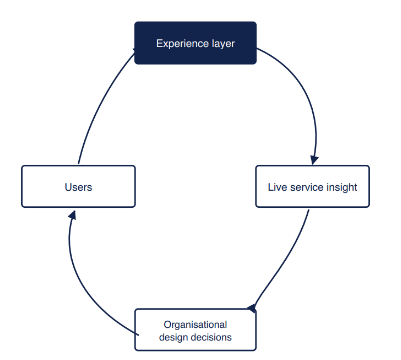
Used well, a portal or single front door can resolve problems for users in the short and longer term, while also enabling teams to remain in control of their respective services, balancing a holistic view of user needs with existing teams' detailed knowledge of users and policy outcomes.
These are webmentions via the IndieWeb and webmention.io.


 +5
+5 


 Cathy Dutton
  Shaun Gomm
  Richard Morton